

Streetwear is looping back, but not in a lazy replay kind of way. It feels more like a loud VHS tracking glitch you notice right away, with noise and color crashing together. Walk through almost any city in 2026 and you’ll see oversized hoodies and boxy graphic T‑shirts all over, layered on people like they never left. The washed‑out colors feel pulled from an old tape drawer, faded and a little off, and that’s usually the goal. This version of ’90s nostalgia is actually doing something. It’s not a costume or a quick seasonal pick. Retro tech fashion and VHS retro design are shaping how younger people dress and create, often without thinking too hard about it, which is part of why it works.
For some people, this era connects straight to childhood memories and half‑forgotten feelings. For others, it’s a time they never lived through but still feel weirdly close to, and that says a lot. The pre‑social media vibe matters here. Things looked rough and unfinished, not polished or filtered, and that often made them feel more real. That raw energy fits naturally with modern streetwear, which keeps pushing back against anything too clean or mass‑produced. Still messy, still honest, and usually better because of it.
Why 90s Nostalgia Hits So Hard in 2026
What pulls people in first is the feeling, not the decade itself. The rise of 90s nostalgia isn’t random. It’s emotional, cultural, and mostly happening online, which is kind of funny. Young adults grew up with fast content, heavy filters, and perfectly tuned feeds. Next to that, the 90s feel calmer. Tech moved slower, visuals were rougher, and rules felt looser, or at least less watched. With less polish, there was more room to just exist, and that contrast feels strong now.
The numbers support this. The global vintage and retro goods market hit 75 billion dollars in 2024 and is expected to double by 2032, which is a lot when you really think about it. Nostalgia-driven fashion buys jumped 30 percent over the last two years, and resale of 90s streetwear went up another 32 percent in 2025. These aren’t small signals; they usually point to a bigger shift taking shape.
| Trend Metric | Value | Year |
|---|---|---|
| Vintage market size | $75B | 2024 |
| Nostalgia fashion growth | +30% | 2023-2025 |
| Vintage streetwear resale growth | +32% | 2025 |
This matters because people aren’t only buying clothes. They’re often chasing comfort and memory, something you can feel while scrolling resale apps. Studies show shoppers pay 15 to 25 percent more for items tied to good memories. In streetwear especially, meaning often matters more than logos right now.
For Gen Z, the 90s can feel like a future that never fully showed up. MTV, VHS, and clunky computers seem more human than today’s tech. Wearing that era becomes a quiet pushback, and no explanation is needed.
VHS Retro Design and 90s Nostalgia in Imperfect Style
VHS retro design is showing up everywhere lately, and streetwear designers are clearly leaning into it (you’ve probably noticed while scrolling). Think static lines, soft blur, off colors, and that dusty grain that looks like it came straight off an old tape. All of it mixed together. In this setting, these visuals feel more real than super clean graphics. The flaws are out in the open, no hiding them, which is usually the whole idea. That rough, imperfect style works well with countercultural fashion because it doesn’t try to behave or clean itself up.
You see it most clearly on graphic tees with glitchy fonts and warped logos that feel slightly broken. Hoodies show up intentionally sun-faded, like they’ve already been worn for years instead of looking brand new. Prints pull from camcorder timestamps, CRT screen glow, and messy overlays that feel just a little off. There’s no shine here, and that’s on purpose. Instead of chasing the ultra-clean look pushed by big brands, these designs step away from it, which is often why they grab attention.
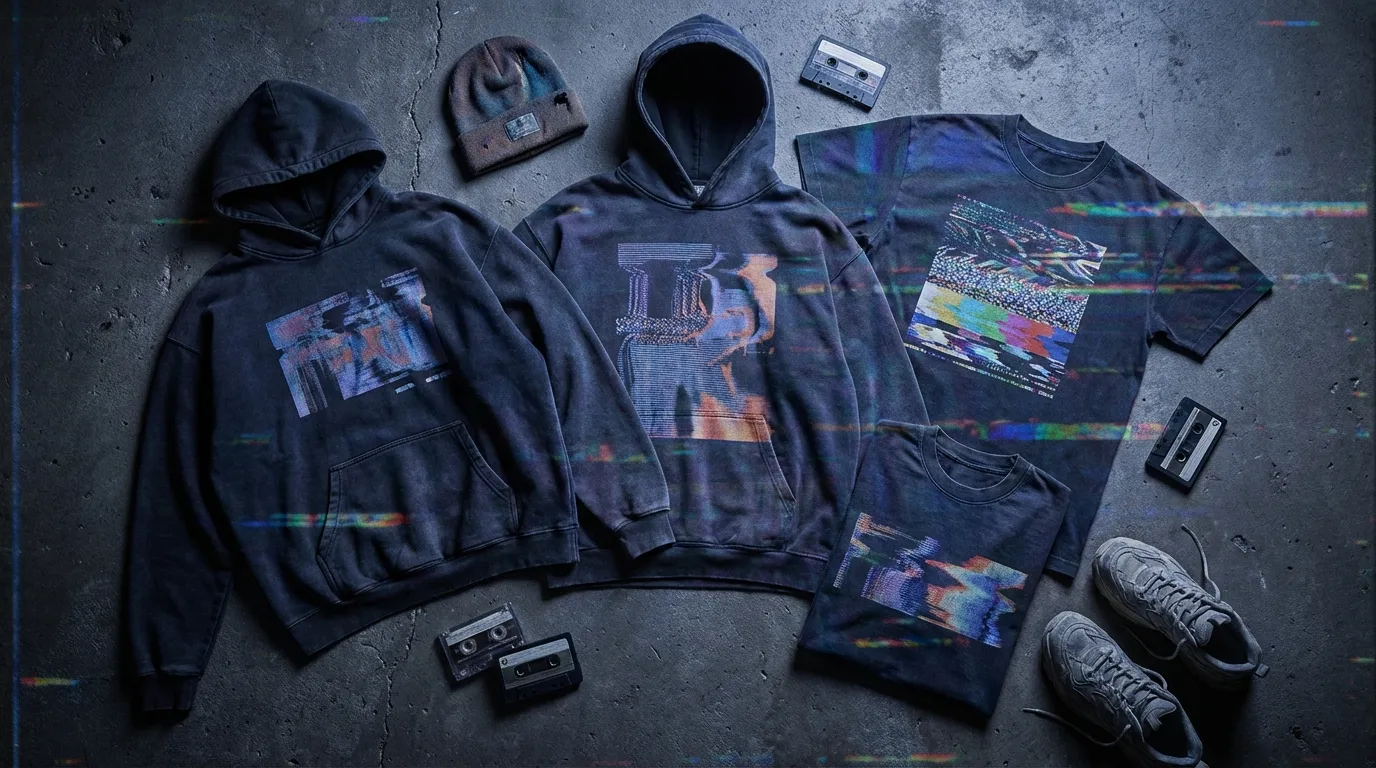
This design style usually works best on staple pieces like oversized hoodies and vintage-style graphic tees. Boxy fits help sell the vibe, and heavy cotton keeps it grounded. Nothing looks tight or refined, and you can tell that’s intentional.
Retro tech fashion also pulls from early computer systems. Pixel icons, old operating system layouts, clunky hardware shapes, chunky UI elements. It feels playful, but there’s still an edge. It points back to a time when tech felt hands-on and exciting, not nonstop and overwhelming (which, honestly, sounds pretty nice).
For example, pieces like the No Signal Hoodie and The End Tee capture that VHS-inspired look perfectly, combining glitch graphics with nostalgic themes.
Why New Generations Love an Era They Never Lived In
What’s interesting about this trend is who’s actually driving it. A large group of people into 90s nostalgia weren’t even around at the time, which still feels a little strange. Even so, about 70 percent of adults ages 18 to 34 say they like retro or heritage-inspired products. That usually points to something beyond real memories. It’s less about living through it and more about chasing a certain vibe. The mood matters more than the date, and that comes through pretty clearly.
A lot of this push comes from social platforms, probably more than most people want to admit. TikTok alone has pushed the 90s hashtag past 12 billion views, with nostalgia content sitting near 100 billion overall. That’s a lot. Short videos of old gadgets, grainy edits, and VHS-style filters keep showing up. Even in feeds run by algorithms, they still feel new, mostly because they’re presented through a modern lens.
This also explains why it’s rarely about copying the past exactly. The draw comes from mixing it up. Younger creatives grab what they like and reshape it for today. A hoodie might nod to a cassette tape, while the fit and fabric match current styles. Graphic tees can look worn on purpose, even though they’re made for modern streetwear cuts.
Problems show up when brands try too hard, and you’ve probably seen this. Slapping a random retro logo on a shirt can feel fake, and people notice fast. The brands that do well usually get the culture behind the look, not just the visuals. That difference tends to show.
Retro Tech Fashion Versus Mass Market Streetwear
You start to notice it when the same retro hoodie shows up on the subway, at shows, and pretty much everywhere else. Big retailers have gone all in on that look because it sells fast. Mall chains and global streetwear sites put retro-style graphics front and center, and yeah, you’ve seen them a hundred times. The cheaper prices help, but originality usually takes a hit. That trade-off isn’t surprising. Playing it safe keeps products moving, even if the whole thing gets boring pretty quickly.
Independent streetwear brands usually go the other way. Instead of endless stock, they stick to limited drops and team up with local artists. They’re more willing to try odd ideas or lean into stuff that feels risky, sometimes a little too much. That risk often builds a clearer identity, even if it doesn’t click with everyone.
Retro tech fashion tends to work best when it feels personal. Price still matters, but it often means more when a small-run tee with ironic text and VHS-style textures feels intentional and carefully put together.
You can see examples of this approach with Typocrisy’s limited drops and To Be Continued Cap, both mixing nostalgia with modern minimalism.
How Brands Are Translating 90s Aesthetics Into Real Products
What makes this work, to me, is restraint. Nostalgia usually works better when brands choose a few clear ideas instead of throwing everything in and hoping it works. You can feel when that focus isn’t there, and when it is, everything clicks and feels more intentional.
Silhouettes usually come first. Oversized hoodies and relaxed tees pull straight from 90s skate and hip‑hop culture, and the looser fit feels right for daily wear. It’s comfortable, easy, and familiar, which is really the goal.
From there, textures, colors, and story carry more weight. Washed blacks and dusty purples feel like they came from old screens, and that’s clearly on purpose. Heavier fabrics add durability and help pieces last longer, which fits with sustainability goals. Each drop sticks to a clear theme, like late‑night music TV or early home computers, so nothing feels random.
Small‑batch printing and artist collaborations keep things interesting without going too far, while also reducing waste. And ethical production is no longer optional.
Where This Trend Is Headed Next
What’s interesting is how sustainability is starting to guide the nostalgia wave. The 90s revival tends to stick around because it changes with the times, and right now there’s pressure to do it in a responsible way. Brands that reuse materials or upcycle older pieces often get more attention than those starting from scratch, but only if it feels real. When it feels forced, people usually tune out.
At the same time, nostalgia isn’t fading, it’s just getting more focused. Looking toward 2026 and beyond, the attention is on very specific moments, early internet culture mixed with underground music scenes. Obscure tech references matter, and only real fans catch them, which is the whole idea.
Fashion and music will keep crossing over. That link keeps changing. Retro tech visuals mixed with modern beats still work, especially through limited drops tied to playlists or small live events.
Where Style and Memory Meet
In 2026, streetwear messages often come through static, glitch effects, and that worn‑out VHS look, faded, imperfect, and a little noisy. You don’t need words to understand it; the message usually gets across on its own. That’s why 90s nostalgia and retro tech fashion don’t feel like short‑lived trends, at least to me. They’re often ways people show who they are, pushing back against overly clean, polished styles and picking something raw and real instead, the kind of look that’s rough by choice and doesn’t try too hard.
So if you’re into streetwear, now feels like a good time to be more intentional. Why settle for just a logo? Brands that tell their stories through graphics and prints, and really support local artists, often feel more meaningful. Streetwear has long been about saying who you are without talking, and a graphic tee or hoodie with a faded VHS print says it clearly.